
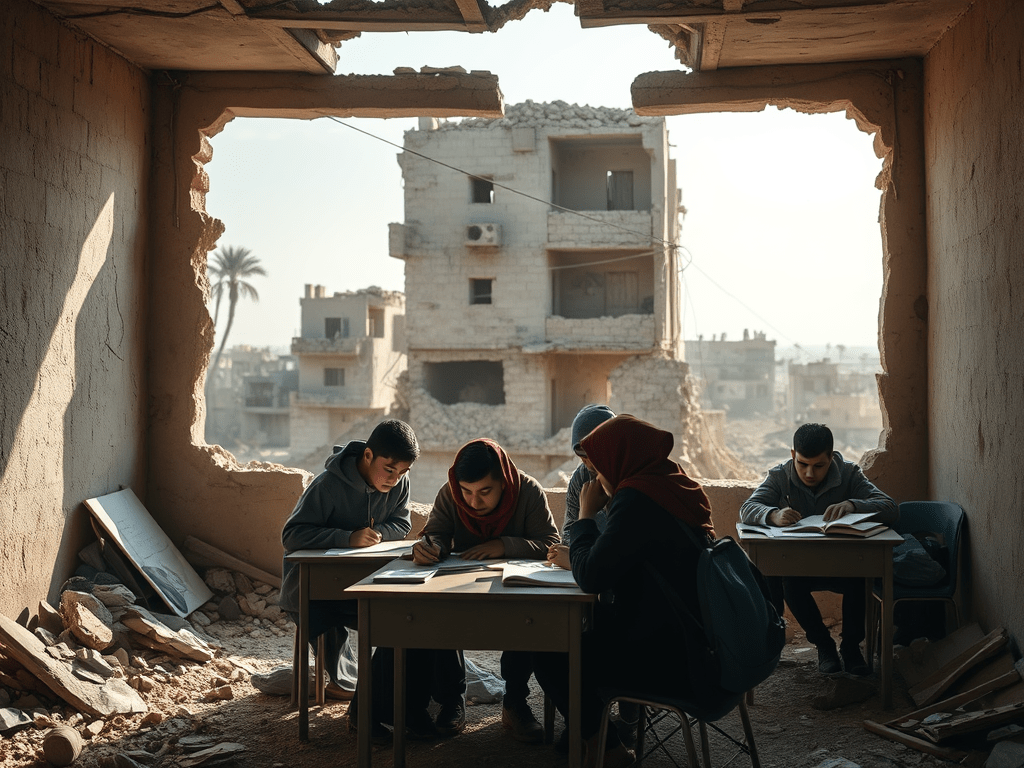
Traveling and Studying Abroad in Times of War
Traveling or studying abroad during periods of armed conflict and geopolitical instability has become an increasingly complex decision. For students, families, and institutions alike, war reshapes not only physical mobility but also legal status, mental well-being, finances, and long‑term academic plans. This overview explains how war affects studying and traveling abroad, the risks involved, and practical ways students and institutions respond, drawing on recent global evidence.
1. How War Disrupts International Education and Travel
Armed conflict directly and indirectly interrupts education systems. Wars destroy infrastructure, displace families, interrupt schooling, and create long-lasting instability that affects students even far from the front lines. International humanitarian law formally protects education during armed conflict, yet in practice universities and schools are frequently damaged, closed, or militarized.
For students who travel abroad:
- Application timelines are interrupted
- Official documents may be lost or unobtainable
- Financial support from home may vanish overnight
- Safety risks become unpredictable
UNESCO and UNESCO‑linked data shows that more than 234 million children and young people globally are affected by conflict, with long-term consequences for access to learning and mobility. [news.un.org], [ungeneva.org]
2. Decline and Redirection of Student Mobility
Global conflicts significantly reshape international student flows. Countries experiencing war or prolonged instability—such as Ukraine, Sudan, Syria, or Gaza—have seen sharp drops in outbound student numbers, largely due to safety concerns, displacement, and administrative obstacles. [linkedin.com], [pioneer-alliance.eu]
Interestingly, conflict can increase mobility rather than stop it entirely:
- Students seek safer countries to continue education
- Economic crises caused by war push students to study abroad
- Host countries sometimes introduce emergency pathways, scholarships, or refugee‑student schemes
UNESCO reported that despite COVID‑19 and ongoing conflicts, global higher‑education mobility continues to grow, though patterns are shifting toward safer, politically stable destinations. [theclassfo…dation.com]
3. Visa Restrictions, Borders, and Legal Uncertainty
One of the most stressful consequences of war is visa instability. During geopolitical conflicts, governments often tighten immigration controls, conduct extra security vetting, or impose sanctions affecting entire nationalities.
Recent examples include:
- Sudden student visa revocations without notice
- Suspension of visa interviews
- Travel bans or exit restrictions
- Sanctions affecting banking and tuition payments
In 2025, thousands of international students—many from conflict‑affected regions—experienced visa cancellations or SEVIS record terminations, creating fear and disrupted studies. Legal experts note that these measures often occur rapidly during periods of geopolitical tension, leaving students with limited legal recourse. [presidents…liance.org], [visaverge.com] [theintercept.com], [immpolicyt…acking.org]
4. Safety Risks and Ethical Concerns
Traveling through or to war‑affected regions carries clear physical risks:
- Armed violence
- Explosive remnants of war
- Infrastructure collapse
- Limited medical access
UNICEF and the UN emphasize that education facilities themselves increasingly become targets during conflict, despite international law protections. These risks also raise ethical questions for universities recruiting students from unstable regions without clear safety guarantees. [unicef.org], [unicefusa.org]
As a response, over 120 countries have endorsed the Safe Schools Declaration, committing to protect students and universities during armed conflict. [unicef.org]
5. Mental Health Impact on International Students
War affects students psychologically—even when they study far from home. Research consistently shows that international students from conflict zones experience:
- Chronic anxiety about family safety
- Survivor’s guilt
- Financial stress
- Isolation and concentration difficulties
Studies on Ukrainian and other conflict‑affected students demonstrate elevated levels of stress, helplessness, and depression, especially when families remain in danger. [files.eric.ed.gov], [frontiersin.org]
Recent reviews in psychiatric and education journals confirm that international students already face higher mental‑health risks, and exposure to war compounds these challenges significantly. [journals.plos.org], [campusment…lhealth.ca]
6. How Institutions and Students Adapt
Despite these challenges, multiple adaptive strategies have emerged:
Universities and Governments
- Emergency scholarships and fee waivers
- Flexible attendance and assessment policies
- Remote or hybrid learning options
- Mental‑health and trauma‑informed counseling
- Refugee‑student admission pathways
Organizations like UNICEF, UNESCO, and the World Bank now emphasize education in emergencies as essential to preventing “lost generations”. [news.un.org], [worldbank.org]
Students
- Choosing geographically and politically stable destinations
- Maintaining digital copies of documents
- Diversifying financial plans
- Seeking peer communities and counseling support
- Staying informed via embassy advisories
Studies show that strong social support networks and institutional sensitivity are the most effective protective factors for international students under stress. [frontiersin.org], [studybuddyabroad.com]
7. Conclusion: Education as Resistance and Continuity
Travelling and studying abroad during times of war is never just an academic decision—it is a personal, political, and emotional one. While war disrupts mobility, it also reinforces the importance of education as continuity, resilience, and hope.
As UN experts emphasize, education during conflict is not optional—it is lifesaving and future‑saving. For students, studying abroad can be a pathway to safety and stability; for host societies, it is an investment in global recovery and peace.
 Kairos Education
Leave a comment